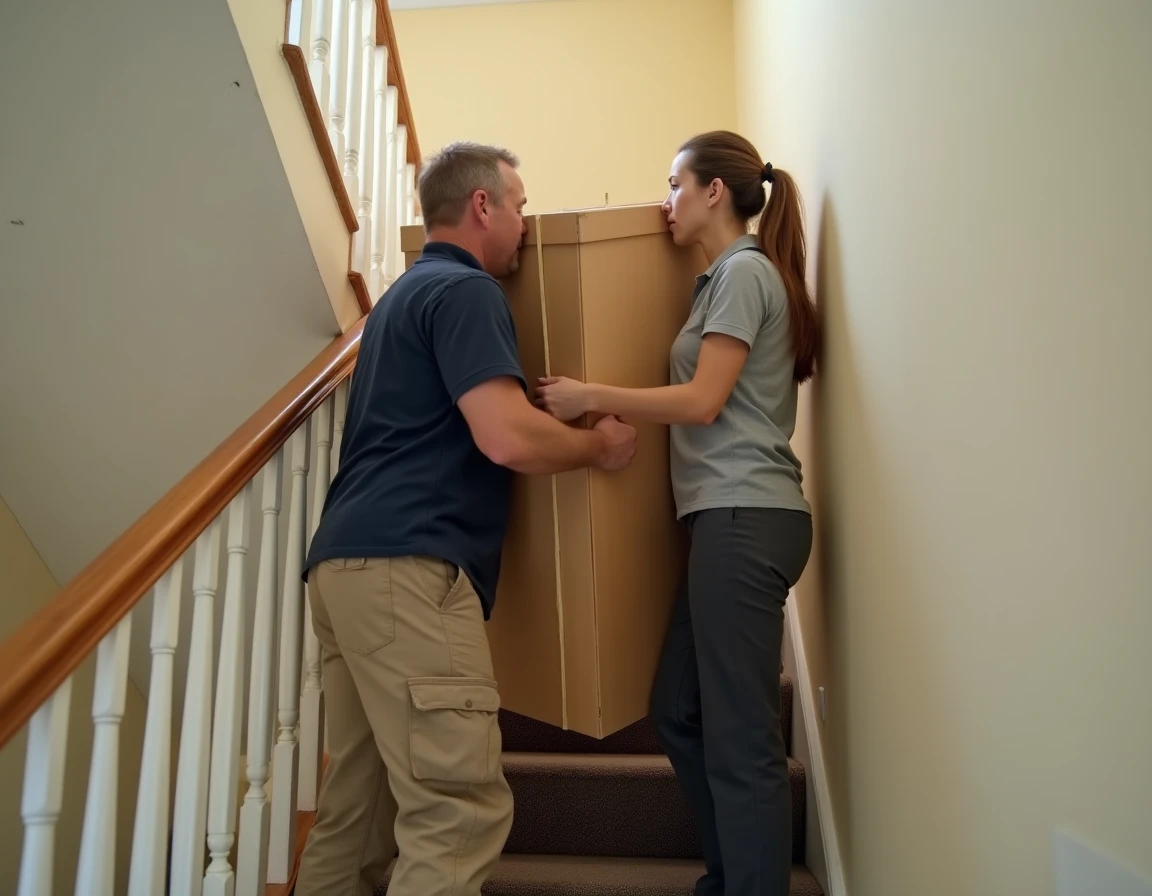
Getting a bulky piece of furniture through a staircase is not just about comparing its width with that of the steps. The geometry of a staircase, its turns, handrails, and the shape of the furniture itself create a three-dimensional puzzle that many individuals discover on moving day. Understanding the truly determining dimensions before purchasing or transporting can prevent costly blockages and even damage to the furniture and walls.
Rotation Diagonal: The Measurement Few People Take
Most guides recommend measuring the height, width, and depth of the furniture, then comparing them to the dimensions of the staircase. This approach works for a straight corridor, but it becomes insufficient as soon as a turn is involved.
Moving professionals now reason in terms of rotation diagonal. The principle: when tilting a piece of furniture to negotiate a landing or a quarter turn, it is the diagonal formed by its height and the angle of tilt that determines whether it will pass or not. This diagonal must remain less than the free diagonal of the staircase, calculated from the width of the passage and the space available above the handrail.
In practice, a sofa whose depth seems compatible with the width of the staircase can get stuck in a turn if its rotation diagonal exceeds the actual space. To anticipate this type of problem, one must check the dimensions to check for a piece of furniture in a staircase by including this often-missing data from product specifications.
Usable Passage Width vs. Official Stair Width
A staircase advertised at a certain width on an architect’s plan never offers that width in practice. The usable passage width is always several centimeters less than the nominal width. Two elements systematically reduce the available space.
- Handrails and balustrades, which protrude on each side and eat into the usable space, sometimes significantly on older staircases where the railings are bulkier
- Protruding stair nosings, which create an additional obstacle when tilting the furniture in turns and prevent the furniture from being pressed against the wall
- Guardrails and balusters on intermediate landings, which limit the height of maneuvering and prevent lifting the furniture above the railing to gain angle
Custom staircase manufacturers now emphasize this distinction between official width and usable width. Ignoring it is the primary cause of blockages in tight turns.
Measure in the Right Place
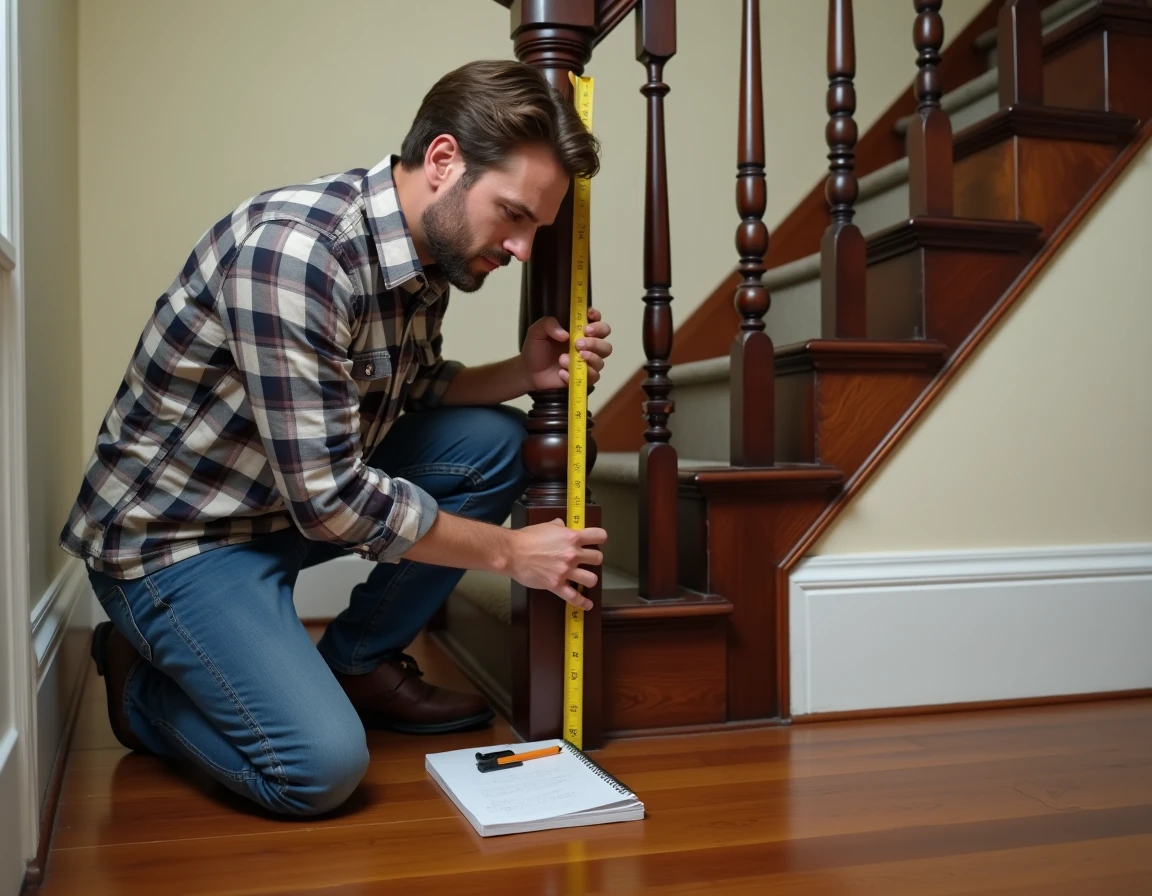
The natural reflex is to measure the width between the two walls. The correct method is to measure between the most protruding elements: the inside of the handrail on one side, and the stair nosing or wall on the other. On a quarter-turn staircase, this measurement should be taken in the turn itself, where the space is most reduced.
Spiral Staircases and Tight Quarter Turns: Special Cases
Recent buildings in France comply with accessibility standards that impose minimum staircase widths and landing setbacks. These constraints facilitate the passage of bulky furniture compared to older buildings. However, spiral staircases or very tight quarter turns remain problematic even when the regulatory width is respected.
The issue lies in the geometry of the turn. In a spiral staircase, the inner radius is very small. A rigid piece of furniture of great length (bookshelf, non-dismantlable wardrobe) simply cannot pivot in the available space, regardless of the carrying technique used.
This is also why moving quotes increasingly include solutions for external furniture lifts when the staircase presents this type of configuration. Before incurring costs, it is better to assess the feasibility of passing through the staircase with the correct measurements in hand.
Diagonal Depth of the Furniture: The Data to Demand from the Manufacturer
Some furniture manufacturers, particularly in the sofa and armchair segment, now indicate a measurement called diagonal depth. This corresponds to the distance between the lowest point of the seat and the highest point of the backrest, measured diagonally. This measurement is crucial because it represents the actual bulk of the furniture when it is tilted for rotation.
The basic rule is as follows: the diagonal depth must be less than the usable passage width of the staircase. If this condition is not met, the furniture will not pass through the turns, even if tilted.
What Product Specifications Don’t Always Mention
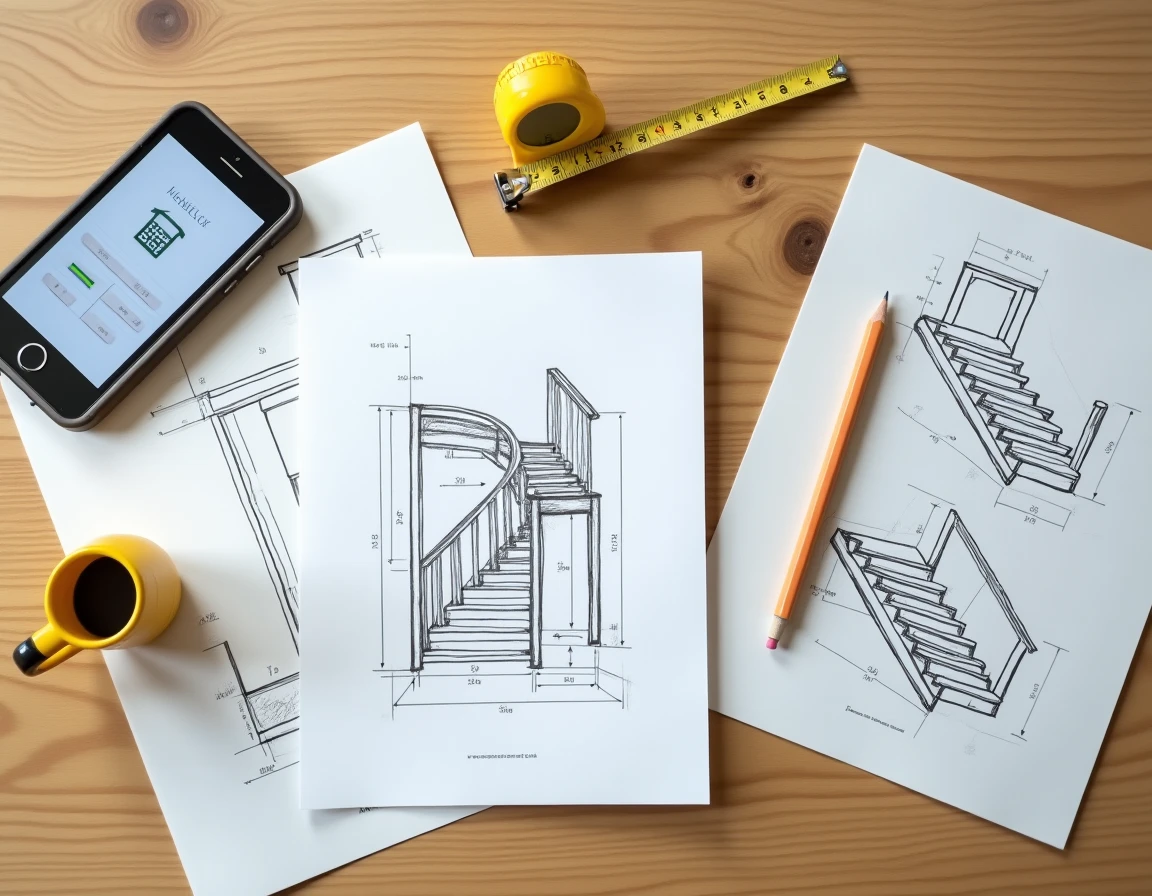
Not all manufacturers provide this data. When it is absent, it must be calculated from the height and depth of the furniture using the Pythagorean theorem. The formula remains simple: square root of (height squared + depth squared). The result gives the maximum diagonal of the furniture, to be compared with the free space measured in the staircase.
- Measure the total height of the furniture (highest point, including feet)
- Measure the total depth (most protruding point of the backrest or rear to the front)
- Apply the diagonal calculation and compare with the usable width measured in the narrowest turn of your staircase
This calculation does not guarantee an easy passage, as it does not take into account the potential flexibility of the furniture (a sofa compresses slightly, but a solid wood wardrobe does not). Field feedback varies on this point: some movers believe that a margin of a few centimeters is sufficient for a sofa, while others refuse any attempt without a comfortable margin.
Anticipate Before Purchase or Moving
The most effective time to check the compatibility between a piece of furniture and a staircase is before the purchase. Once the order is placed and the delivery scheduled, options are reduced to disassembly (when the furniture allows it), passing through a window with a lift, or simply returning the product.
Taking a tape measure, measuring the usable width in the tightest turn, calculating the diagonal of the desired furniture, and comparing the two figures takes less than ten minutes. This simple reflex avoids situations where a piece of furniture gets stuck between two floors, along with the costs and damages that entails.