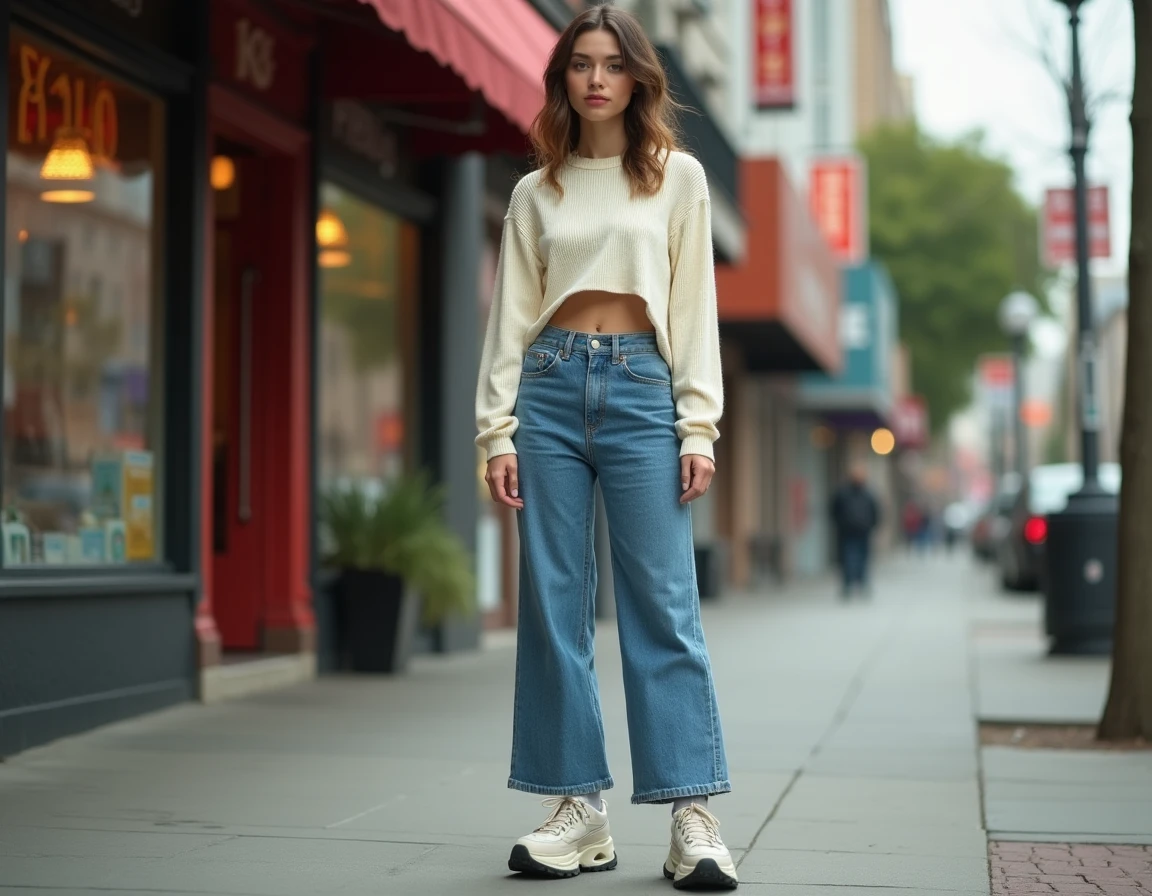
In 1995, you could encounter a minimalist pearl gray suit and a fluorescent baggy pant worn with platform shoes on the same street. This brutal coexistence of styles was not a coincidence: it reflected a very concrete generational and socio-economic divide in the way people dressed. The fashion of 1995 remains a pivotal year, caught between the fading grunge and the explosion of fast fashion, with pieces and silhouettes that continue to feed current collections.
Technical fabrics and stretch materials: the real textile break of 1995
In 1995, stretch and metallic fabrics left sportswear to enter ready-to-wear. Hussein Chalayan, in particular, pushed textile experimentation towards conceptual clothing that foreshadowed what we now call techwear.
Elastane fibers became widespread in dresses, pants, and even jackets. The result: cuts that were closer to the body, increased freedom of movement, and a visual effect that contrasted with the voluminous layers of the early decade.
For those interested in the fashion trends of 1995 on Aleph Zarro, this textile dimension is often underestimated, even though it conditioned everything else, from silhouettes to accessories.
Polarization of urban styles in 1995: office vs street
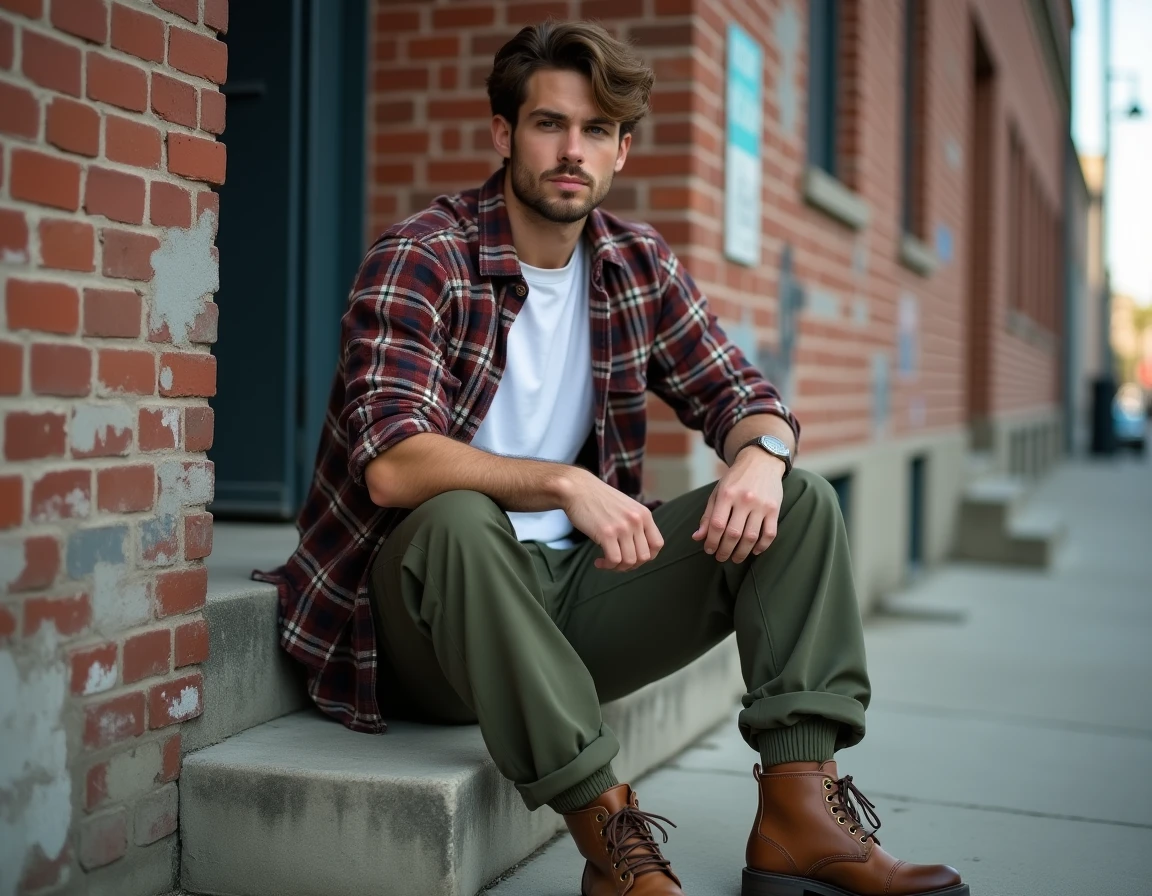
What strikes you when looking at street photos from that time is the coexistence of two wardrobes that do not communicate. On one side, the office minimalism represented by lines like Jil Sander: sober suits, neutral colors, architectural cuts. On the other, an urban sportswear influenced by hip-hop and R’n’B that imposed baggy pants, oversized sneakers, and visible logos.
This polarization was not just aesthetic. It reflected very real social fractures in Western Europe in the mid-1990s. Clothing served as a marker of belonging, and the bridges between these two worlds remained rare, at least outside of the runways.
Minimalism as a professional uniform
The streamlined suit version of 1995 was anything but a passing trend. It responded to a concrete need: to dress for the office without ostentation, in an economic context still marked by the recession of the early decade. Straight lines, grays, beiges, and blacks dominated.
Jil Sander and Calvin Klein embodied this functional sobriety, with pieces that focused on fabric quality rather than ornamentation. This is a direct legacy found in today’s quiet luxury.
Sportswear as a generational language
In contrast, the generation growing up with rap and R’n’B adopted a radically different wardrobe. Tracksuits worn outside the sports field, flat-brimmed caps, and oversized puffer jackets: everything referenced a musical culture and an identity claim.
Jean Paul Gaultier was one of the few designers to attempt a bridge between these two worlds, integrating streetwear codes into haute couture collections. Reactions to this approach at the time varied, but its influence on the blending of fashion genres is now universally recognized.
Platforms and accessories of 1995: what is really returning in current collections
Platform shoes became the most immediate visual symbol of 1995 fashion. Worn with both dresses and jeans, they added about ten centimeters and a recognizable silhouette. Their cyclical return in collections confirms their status as an iconic piece.
- Wedge platforms: present at Vivienne Westwood since the early 1990s, they peaked in popularity in 1995 with increasingly thick soles
- Smooth leather minimalist bags: the accessory response to the sober suit, featuring simple geometric shapes and solid colors
- Chokers and close-fitting necklaces: making a strong comeback in current fashion, they were ubiquitous in 1995, worn in both velvet and clear plastic
- Thin oval-frame sunglasses: a strong marker of the era, adopted by icons of cinema and music
Fast fashion and shortening cycles: the hidden side of 1995 fashion
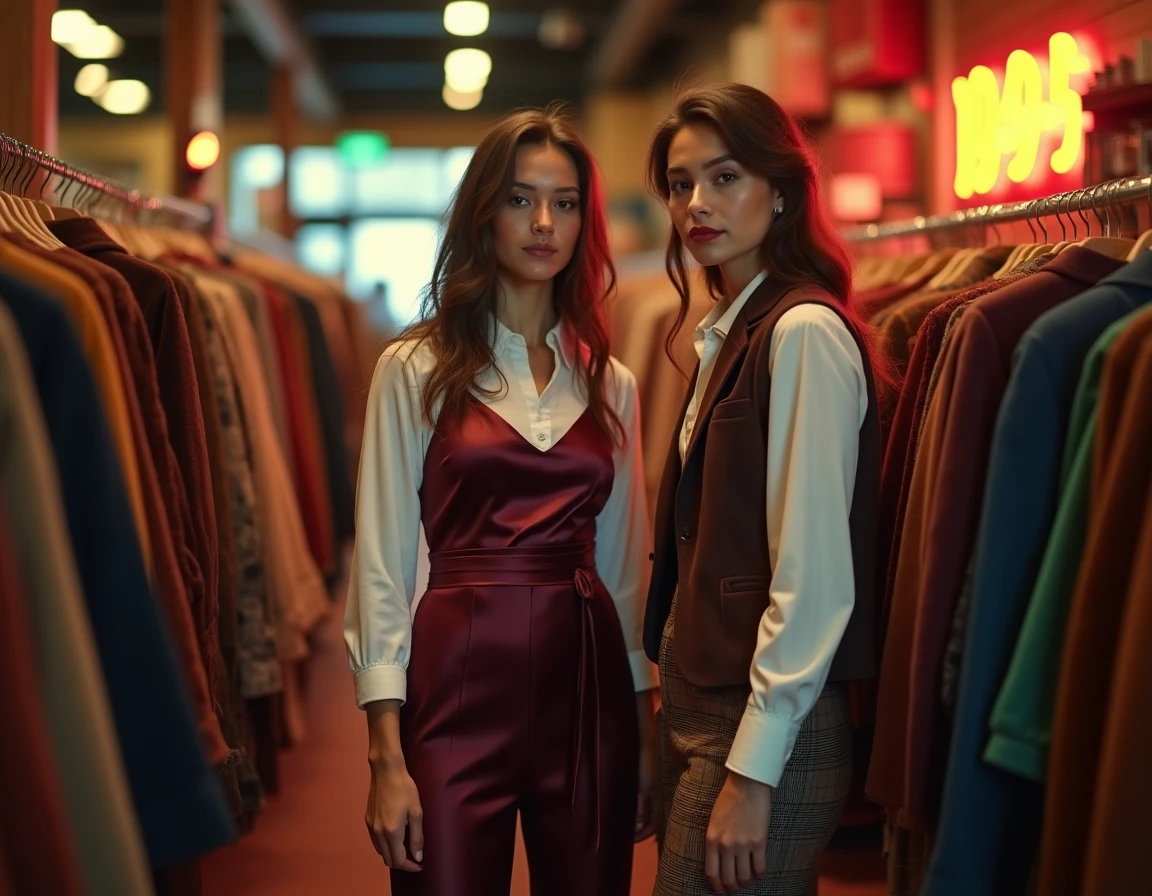
While designers paraded in Paris and Milan, another transformation was taking place in shopping malls. In 1995, chains like Zara and H&M accelerated their expansion in Europe and began to drastically shorten the collection renewal cycles.
The principle was simple: reproduce runway trends in a few weeks, at accessible prices. This mechanism profoundly changed the relationship with clothing. People shifted from a model where they bought a few pieces per season to a logic of permanent renewal.
This shift towards fast fashion, initiated in the mid-1990s, foreshadowed the ultra-fast model that still dominates mainstream fashion. The trends of 1995 were shaped as much by designers as by this industrialization of rapid copying.
The legacy of heroin chic and its consequences
You cannot talk about 1995 without mentioning the heroin chic movement, which normalized very thin silhouettes, pale skin, and visible dark circles in the media. This style, worn among others by Kate Moss, coexisted with more athletic silhouettes from R’n’B and sports.
This tension between two opposing body standards has left a lasting mark on the industry. It fueled debates about the fashion industry’s responsibility in promoting unrealistic physical norms, discussions that remain vibrant thirty years later.
The fashion of 1995 is not just a collection of vintage pieces to be revived. It laid the groundwork for industrial mechanisms, aesthetic tensions, and cultural fractures that still structure the sector. Platforms are making a comeback, minimalism too, and the accelerated collection renewal model launched at that time remains the dominant framework of mainstream fashion.